What Is Sound Therapy: A Complete Guide for 2026
Discover what is sound therapy, including singing bowls and binaural beats, and learn how it can support your well-being in 2026.
Written by Editorial Team
What do singing bowls, white noise, binaural beats, and clinical tinnitus devices have in common? They all appear in conversations about what is sound therapy, yet they don't serve the same purpose, use the same delivery method, or have the same level of scientific support. Treating them as one intervention makes it harder to choose a suitable experience and easier to believe claims the evidence doesn't support.
Sound therapy is best understood as an umbrella term for using sound, and sometimes vibration, to influence listening, relaxation, attention, or symptom perception. Some formats are designed for clinical goals, especially tinnitus management. Others belong to the experiential wellness world, where people attend sound baths or use guided audio to settle their minds. The useful question isn't whether sound therapy works. It's which type is being offered, for what goal, and with what evidence behind it.
Why a Single Definition of Sound Therapy Falls Short
A single definition fails because “sound therapy” names a family of practices rather than one standardized treatment. Clinical use may involve amplification devices, sound generators, tinnitus masking, tinnitus retraining therapy, or music-based sound enrichment, while wellness providers may use singing bowls, gongs, tuning forks, recorded meditation music, or body-based vibration. These approaches can feel completely different to the participant.
The intended outcome also changes the meaning. A person with tinnitus may use carefully selected sound to make an intrusive ringing sensation less noticeable. Someone attending a sound bath may be seeking a quiet, structured period of relaxation. Another listener may use headphones and rhythmic audio while studying. Calling all three experiences “sound healing” without further detail leaves out the information a newcomer needs.
Start with the use case
A clearer way to understand the field is to sort each modality by four questions:
- What produces the sound? Instruments, speakers, headphones, a clinical device, or a vibrating surface?
- How is it delivered? Live, recorded, customized, or combined with education and consultation?
- What does the participant want to change? Tinnitus distress, sleep, anxiety, focus, pain, or general relaxation?
- How strong is the evidence? Some clinical applications have a more developed research base, while broad wellness claims remain uneven.
This framework prevents a common mistake: assuming that a soothing experience automatically provides a medical treatment. Sound can shape attention, emotional state, and the way a person perceives an ongoing stimulus. That doesn't mean it repairs damaged tissue or cures every condition associated with stress.
Practical rule: Choose the modality by the problem you want to address, not by the most impressive description of its frequencies or vibrations.
The sections that follow separate the major formats, explain the mechanisms proposed for them, and place their benefits on a realistic evidence spectrum. That distinction matters because an enjoyable wellness session can still be valuable without making claims that belong to clinical care.
The Main Modalities of Sound Therapy
The phrase “sound therapy” can describe several very different experiences. A singing bowl session uses metal or crystal bowls struck or rubbed to create resonant tones. Participants usually sit or lie down while a practitioner plays the instruments live. The common goal is relaxation, meditation, or a focused listening experience.
A gong bath uses large gongs that produce layered, changing tones and vibrations across a room. The sound can be immersive and physically noticeable, so people often attend for deep rest or sensory immersion rather than targeted symptom treatment. A tuning fork session uses individually struck forks placed near the body or, in some practices, on selected areas. Its use is generally associated with relaxation and ritualized sound work, though the claims made by practitioners vary considerably.
A guided sound bath may combine bowls, gongs, chimes, vocal tones, breath cues, and spoken meditation. If you're new to the format, this sound bath meditation guide can help distinguish a structured listening practice from a more open-ended performance.
Headphones, speakers, and vibration
Binaural beats use separate tones in each ear, normally through headphones, so the listener perceives an additional rhythmic difference between them. People commonly choose them for relaxation, focus, or sleep. The proposed neurological effects remain contested, so the sensible test is whether the audio helps your chosen task, not whether it guarantees a particular brain state.
Vibroacoustic therapy adds physical vibration through a chair, mat, or other surface. This makes it different from ordinary listening because the participant experiences sound through both hearing and bodily sensation. It may be offered for relaxation or symptom support, but medical concerns and practitioner qualifications deserve careful attention.
Clinical tinnitus-focused sound therapy may use amplification, masking, customized sound, education, or combinations of these approaches. It's the clearest example of why the umbrella term needs precision: a customized tinnitus protocol isn't interchangeable with a communal gong bath.
| Modality | Sound source | Typical delivery | Primary use case |
|---|---|---|---|
| Singing bowls | Metal or crystal bowls | Live, in person | Relaxation and meditation |
| Gong bath | Large resonant gongs | Live, in a group or private session | Immersive rest |
| Tuning forks | Struck metal forks | Live, near or sometimes on the body | Experiential relaxation |
| Guided sound bath | Bowls, gongs, chimes, voice, or recordings | Live or recorded | Meditation and stress management |
| Binaural beats | Two tones with separate channels | Headphones | Focus, relaxation, or sleep routines |
| Vibroacoustic therapy | Speakers combined with a vibrating surface | Chair, mat, or table | Body-based relaxation and symptom support |
| Clinical tinnitus therapy | Masking, amplification, customized audio, or sound enrichment | Device, headphones, or speakers | Tinnitus management |
How Sound Therapy Is Thought to Work
Sound therapy doesn't appear to work by physically “healing” tissue. Its proposed effects involve what the brain notices, how it interprets repeated signals, and how the nervous system responds to a controlled sensory environment. The mechanism is closer to changing the relationship between a signal and your attention than repairing the source of that signal.
Three useful mechanisms
Auditory masking is the simplest analogy. If a dripping tap keeps drawing your attention, adding a steady, gentle background sound can reduce the contrast between the drip and the rest of the room. Tinnitus sound therapy may use a similar principle by introducing broadband, customized, or otherwise selected sound that makes the internal signal less prominent.
Habituation takes the idea further. The brain constantly decides which inputs deserve attention. A clock ticking may feel obvious in a quiet room, then disappear from awareness after you've lived with it for a while. Repeated, tolerable sound exposure paired with education or consultation may help some people treat tinnitus as less urgent, even when the sound itself hasn't vanished.
Central nervous system modulation describes changes in arousal, emotion, and attention. Reviews of sound and music neuroscience discuss activity in the primary auditory cortex and wider reward and emotion networks, including cortico-striatal circuits and the nucleus accumbens. Rhythmic sound can also produce entrainment or frequency-following effects measurable on EEG, although that finding shouldn't be converted into a promise of a guaranteed therapeutic brain state.
For a plain-language discussion of how calming practices relate to stress regulation, see nervous system healing. The important distinction is that a calmer response may reduce perceived distress without proving that sound has corrected an underlying disease.
Where marketing outruns evidence
Binaural beats are a useful example of the boundary between plausible mechanism and overclaim. Some research has reported brainwave effects, while other studies haven't, leaving claims about reliable, universal entrainment contradictory. Listening may still help a person relax or concentrate, but personal benefit doesn't establish a fixed neurological outcome for everyone.
A credible provider can describe the intended experience without promising that a frequency will reset your brain, remove disease, or replace medical care.
Judge a protocol by outcomes you can observe, such as lower symptom burden, easier habituation, improved sleep, or reduced stress. Those outcomes are more meaningful than a claim that a particular tone must produce the same internal response in every listener.
What the Evidence Supports
How should you judge a sound therapy claim without treating every format as equally proven? Arrange the evidence by use case. Tinnitus management has the strongest support in the available evidence, while findings for general wellness, sleep, anxiety, and pain vary by setting and protocol.
Tinnitus has the clearest support
Evidence syntheses involving adults with tinnitus suggest that combined approaches can outperform a single treatment. Sound stimulation paired with educational consultation or drug therapy produced better tinnitus-alleviation outcomes than individual treatments. A NICE evidence review also reported clinical benefit from customized sound therapy for tinnitus distress and severity. The tinnitus evidence synthesis supports a practical conclusion: sound therapy is generally an adjunct, not a stand-alone cure.
The format matters. Delivery method, customization, listening habits, education, and the listener's response can all affect the experience and outcome. Persistent or distressing tinnitus warrants assessment by an appropriate healthcare professional. A sound bath should not replace that evaluation.
Other uses show more limited support
An umbrella review found consistent improvements in tinnitus-related outcomes from sound and music therapy, while results for other approaches were mixed. A 2025 systematic review in young adults reported small-to-moderate gains for sleep, anxiety, and stress regulation, but rated the certainty of evidence low to moderate. These findings support cautious interest, not a promise that any sound format will reliably treat insomnia or anxiety.
Clinical context also changes the interpretation. A 2025 review of ICU patients found that music and nonmusic sound interventions could reduce pain, improve sleep, and lower cortisol, with more supporting evidence for music than for nonmusic sound. An ICU protocol, however, cannot automatically be treated as evidence for a commercial sound bath. The setting, supervision, participant needs, and intervention all differ.
A practical evidence filter
Before choosing a modality, ask four questions:
- Who was studied? The evidence may concern adults with tinnitus or patients receiving intensive care, not healthy consumers at a wellness event.
- What was measured? Outcomes such as tinnitus distress, sleep, pain, or cortisol are more useful than a general claim about healing.
- What protocol was tested? Specific music, sound, timing, and delivery methods provide more information than “frequency” used as a vague explanation.
- What role is realistic? Complementary support is a more defensible expectation than a cure.
Sound therapy can be worth exploring when the goal and evidence match. Personal relaxation may be meaningful, but an enjoyable experience does not establish a medical effect.
What to Expect in a Sound Therapy Session
Most in-person sessions begin with a short intake conversation. The practitioner may ask about your goals, sound sensitivity, tinnitus, migraines, seizure history, medical devices, pregnancy, recent procedures, and any preferences about volume or physical contact. A responsible provider should explain the instruments and give you a clear way to pause or leave if the sound becomes uncomfortable.
For a sound bath, you'll usually lie on a mat or sit in a comfortable position while the practitioner plays instruments around the room. Wear layers because stillness can make you feel cool, and consider bringing water, a mat if the venue doesn't provide one, and anything that helps you rest without blocking safety instructions. A headphone-based binaural beat session feels different, with the audio delivered privately and the experience shaped by the recording rather than by live room acoustics.
During and after the session
People may notice relaxation, drowsiness, shifting attention, tingling, warmth, or emotional reactions. Others may feel neutral, distracted, or irritated by a particular tone. None of these responses proves that tissue has been repaired or that a treatment has worked, and you don't need to force a dramatic experience.
Ask these questions before booking:
- What modality do you use? Find out whether the session involves bowls, gongs, headphones, vibration, guided meditation, or a combination.
- How is volume managed? A practitioner should be willing to adjust intensity.
- What happens if I feel unwell? Look for a clear stop signal and an accessible exit.
- What claims do you make? Be wary of promises to cure medical conditions.
- What should I disclose? The intake process should cover relevant health and sound-sensitivity concerns.
Afterward, note the outcome you wanted. If your goal was relaxation, consider whether you felt more settled later. If your goal was tinnitus support, track distress and daily functioning rather than expecting the sound to disappear immediately. A session is an experience, not a test you can fail.
Who Should Be Cautious About Sound Therapy
Sound therapy isn't automatically appropriate just because it takes place in a wellness setting. Gentle recorded music at a comfortable volume presents different considerations from a loud gong session, close-range tuning forks, or a vibroacoustic treatment that transmits physical vibration through a chair or mat.
Consult a clinician before high-volume or body-vibration work if you have an implanted medical device, a seizure condition, sound-triggered migraines, a serious cardiac condition, or another condition that could make intense sensory stimulation unsuitable. People with active psychosis should also seek clinical guidance before using practices that may alter sensory experience or emotional arousal.
Pregnancy requires individual advice, especially when a session includes strong vibration, pressure, unusual positioning, or other physical components. Pregnancy complications are a reason to involve an obstetric clinician rather than relying on a wellness practitioner's general reassurance. Recent surgery can also affect whether lying on a mat, receiving contact, or using vibration is sensible.
Match the intensity to your situation
Start with the least intense format that fits your goal. A quiet, recorded meditation track may be a reasonable first step for someone who wants relaxation but is unsure about live instruments. Someone with tinnitus or significant sound sensitivity may need a customized clinical approach rather than an unpredictable room with changing volume.
Don't stop prescribed medical or mental health treatment because a sound practitioner recommends it. Sound therapy can be complementary, but it shouldn't replace evaluation for new hearing changes, severe tinnitus, significant pain, sleep problems, or psychological symptoms.
Safety comes from fit and disclosure. Tell the provider what could affect your response, and choose a format that allows volume, distance, and duration to be adjusted.
Choosing a Practitioner and Finding Local Offerings
A practitioner should be able to name the modality they provide without hiding behind broad phrases such as “frequency healing.” Ask about training, supervised experience, the instruments used, expected volume, session structure, cancellation terms, and health situations that require caution. A weekend certificate may describe a provider's background, but it doesn't by itself establish clinical expertise.
Look for practical transparency:
- Clear scope: The practitioner distinguishes relaxation support from diagnosis or treatment.
- Relevant training: Their education matches the service, especially when vibration, tinnitus, trauma, or mental health concerns are involved.
- Informed consent: You receive an explanation of what will happen and how to stop.
- Specific claims: They describe likely goals without promising universal results.
- Accessible details: The listing or booking page identifies the location, modality, amenities, and session format.
Lucidoura offers a curated directory of wellness venues, with categories and city filters that can help people compare meditation, sound-bath, and related local offerings. For a sound bath near me, use the same questions above to evaluate each venue rather than choosing solely from a vivid description.
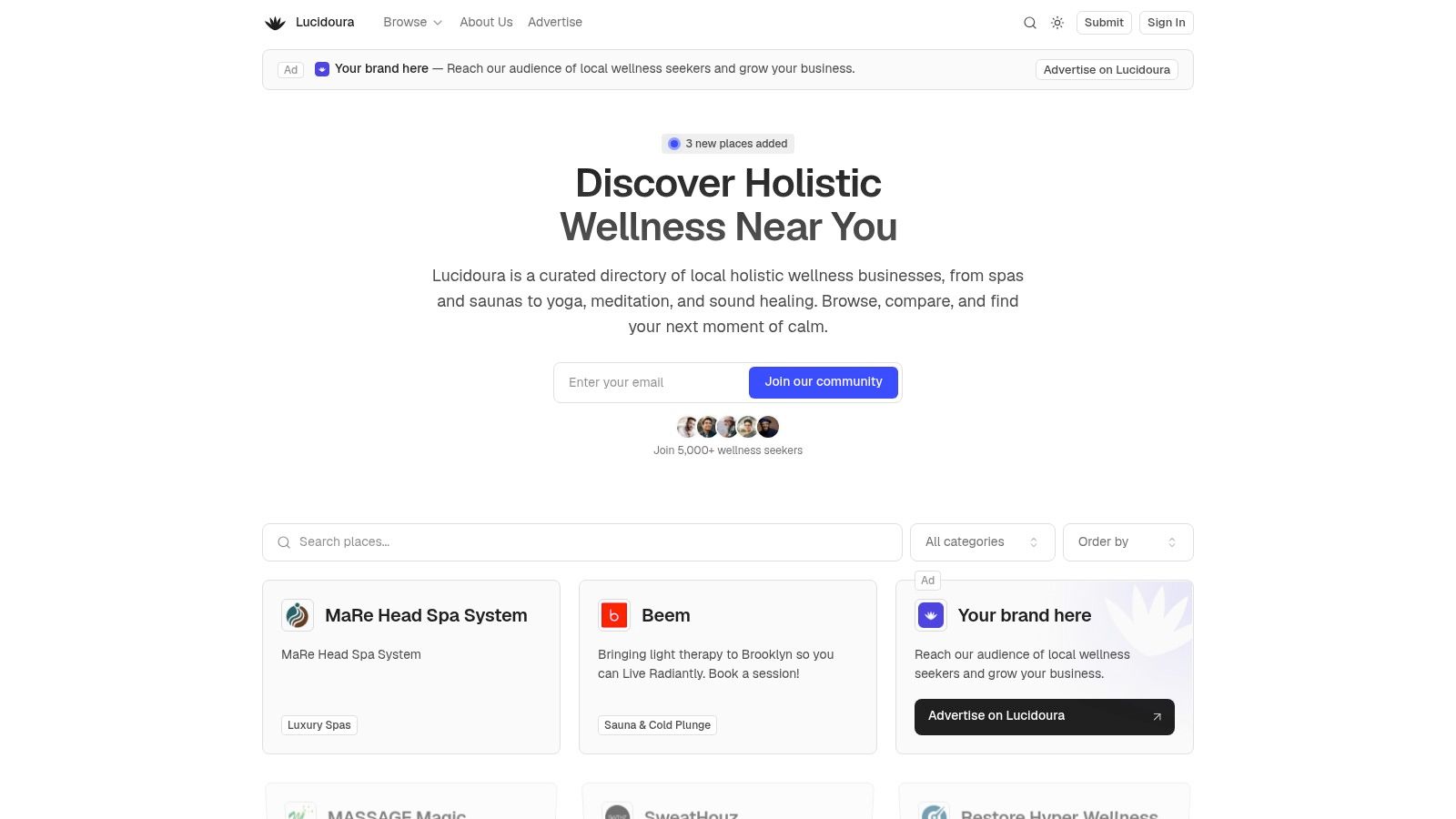
A directory can shorten the discovery process, but it can't make a health decision for you. Check the provider's current policies, contact the venue about contraindications, and confirm whether the session is live, recorded, headphone-based, or vibration-based before paying.
Matching Sound Therapy to Your Goal and Next Steps
The most useful map is straightforward:
- Tinnitus distress: Look for clinical sound therapy that may include customized sound, education, amplification, or masking.
- General relaxation: A guided sound bath, quiet singing bowl session, or calming music may fit.
- Sleep support: Try a gentle, low-volume recording or guided audio as part of a consistent bedtime routine.
- Focus: Binaural beats or unobtrusive ambient sound may be worth testing, without assuming guaranteed brainwave entrainment.
- Pain or clinical symptom support: Ask about music-based interventions delivered alongside appropriate healthcare, especially in supervised settings.
There isn't a universal schedule or guaranteed time to results. Response depends on the person, the goal, the sound, and the setting. If you're curious, start with a short, comfortable recorded session at home, or book an in-person experience after checking the venue's volume policy and health screening.
The answer to “is sound therapy safe?” is conditional. Gentle listening is different from loud live sound or physical vibration, and medical conditions deserve professional advice. “How often should I attend?” also has no single answer. Use your response and the provider's guidance, and stop if symptoms worsen. “How quickly will it work?” depends on the outcome, so track practical changes rather than waiting for a dramatic sensation.
Lucidoura helps you discover local wellness spaces by modality, category, and city, including venues offering meditation and sound-bath experiences. Visit Lucidoura to compare relevant local options, then contact a provider with the safety and evidence questions that fit your goal.