Breathwork Benefits: Science-Backed Guide
Discover evidence-based breathwork benefits for stress, anxiety, and physical health. Learn major modalities, safety tips, and how to find vetted studios near
Written by Editorial Team
A 2023 meta-analysis pooling controlled studies found that breathwork was associated with a small-to-medium reduction in self-reported stress, with an effect size of g = -0.35 and a 95% confidence interval from -0.55 to -0.14 (Scientific Reports). That result doesn't prove every breathing exercise will work for every person, but it does challenge the idea that breathwork benefits are only anecdotal or too vague to study.
Breathwork is the deliberate use of breathing patterns to influence attention, arousal, mood, and autonomic activity. The practical question isn't whether breathing matters. You already breathe automatically. The more useful question is which breathing pattern fits your goal, how intensely you should practice, and when guidance is safer than experimenting alone.
What Breathwork Actually Is and Why It Matters Now
Breathwork turns an automatic body function into a form of self-regulation. Your breathing continues without conscious effort, yet you can also change its pace, depth, rhythm, and emphasis. That gives you a limited manual override on the nervous system's autopilot.
A simple analogy helps. Your nervous system has an accelerator and a brake. Rapid, forceful breathing can increase activation, while slower, structured breathing may support down-regulation. The outcome depends on the protocol, the person, and the context. “Breathwork” is therefore an umbrella term, not one standardized exercise.
More than taking a deep breath
Casual deep breathing and structured breathwork overlap, but they aren't identical. Taking a few comfortable breaths before a meeting may help you pause and redirect attention. A formal protocol may specify the inhale, exhale, pauses, breathing rate, posture, duration, and whether the mouth or nose is used.
That distinction matters because cadence changes physiology. Research on controlled breathing shows that different rates can produce different heart-rate-variability patterns, so a technique designed for calm shouldn't automatically be treated as suitable for energy, emotional exploration, or performance (rate-dependent physiological findings).
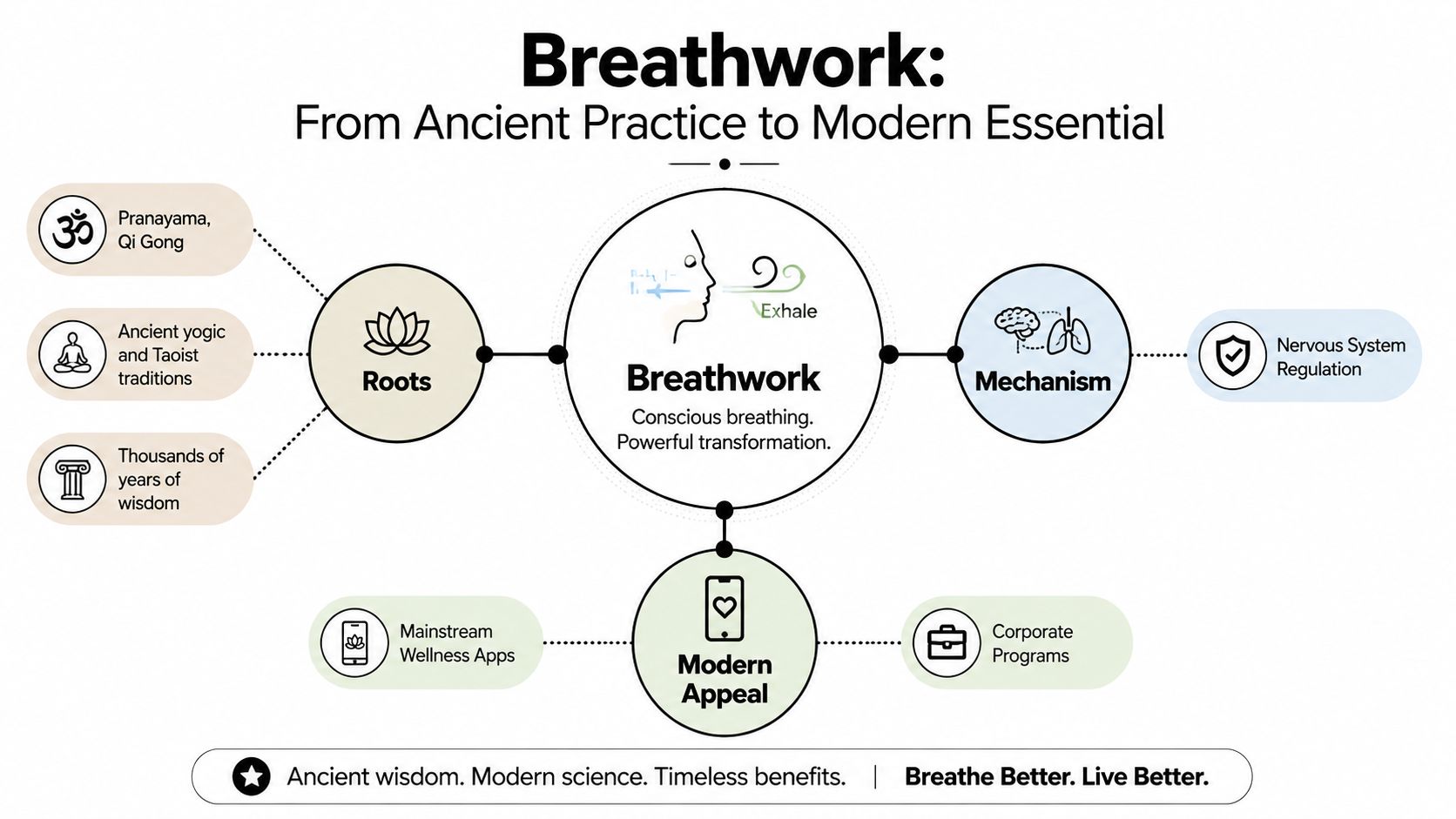
The modern appeal is easy to understand. Breathing is portable, inexpensive, and available during a commute, at a desk, or before sleep. That convenience has brought practices with roots in traditions such as pranayama and Qi Gong into wellness apps, classes, and clinical research.
Why the evidence deserves a careful reading
The 2023 review reported significant associations with anxiety and depressive symptoms as well as stress. The anxiety analysis included 20 study groups, with g = -0.32, while the depression analysis included 18 study groups, with g = -0.40. The review reported intermediate heterogeneity, I² = 42%, meaning results varied across studies rather than pointing to one identical response (Scientific Reports meta-analysis).
That's meaningful evidence, but it isn't a promise or a diagnosis. Breathwork can be a complementary practice, not a replacement for mental-health care when symptoms are persistent, severe, or unsafe.
How Breathwork Changes Your Body in Real Time
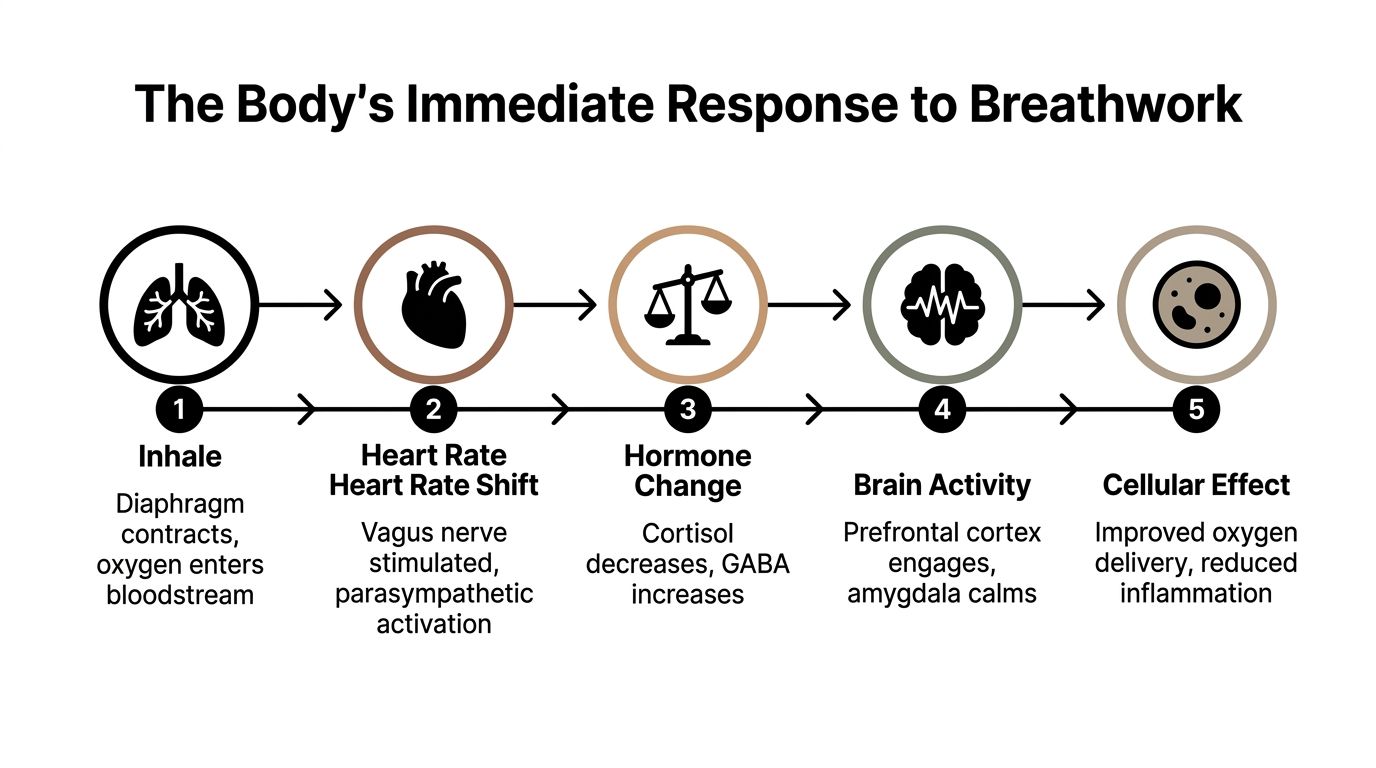
Breathing affects the body through several connected pathways. It changes air movement, carbon dioxide regulation, pressure inside the chest, signals traveling through the vagus nerve, and the rhythm of heart-rate fluctuations. The nervous system then interprets those signals in context.
Think of the autonomic nervous system as a vehicle's control system. The sympathetic branch helps mobilize energy, like an accelerator. The parasympathetic branch supports recovery and restoration, like a brake. Breathwork changes the signals reaching both systems, and the balance depends partly on the breathing rate.
HRV is a useful clue, not a wellness score
Heart-rate variability, or HRV, describes variation in the time between heartbeats. A healthy nervous system needs flexibility, because it must respond to demands and then recover. Breath-linked changes in heart rhythm can provide information about autonomic activity, although HRV isn't a complete measure of health or emotional wellbeing.
Physiological research illustrates why technique selection matters. Breathing at about 0.25 Hz increased heart rate and lowered the high-frequency HRV component. Slower breathing at about 0.10 Hz markedly increased the LF/HF ratio and reduced HF, indicating a different shift in autonomic balance (controlled-breathing physiology research).
Those findings don't mean one rate is universally superior. They show that breathwork is a toolkit, not a single mechanism. A calming practice, a performance-oriented exercise, and an intensive emotional process may produce very different sensations and physiological responses.
What you might notice during practice
A slower, comfortable rhythm may make the exhale feel like a release of muscular and mental effort. Some people notice their shoulders dropping, their thoughts becoming less urgent, or their attention narrowing toward the present breath. Those are subjective experiences, not proof that a particular biological change has occurred.
Structured breathing can also change respiratory rate and mood quickly. A randomized study found that a 5-minute daily exhale-focused cyclic sighing practice improved mood and reduced respiratory rate more than mindfulness meditation, while both approaches reduced state anxiety and negative affect and increased positive affect (randomized cyclic sighing study).
For an accessible explanation of how breathing relates to nervous-system regulation, see this guide to nervous system healing. Use it as background, not as a reason to force your breathing or chase dramatic sensations.
Mental Health Benefits Backed by Clinical Evidence
Clinical evidence supports breathwork as a possible complement for stress, anxiety, and depressive symptoms. It does not show that breathing exercises solve every mental-health condition, replace treatment, or work equally well for everyone. The most useful question is narrower: which practices may offer a manageable addition to an existing care plan?
Stress reduction
A pooled review of controlled studies found a small-to-medium reduction in self-reported stress among participants using breathwork compared with non-breathwork controls (Scientific Reports review). The result supports breathwork as a potential stress-regulation tool, while leaving room for differences in technique, supervision, adherence, and participant expectations.
A practical implication follows. A gentle exercise that someone can repeat consistently may be more useful than an intense method that feels impressive but is difficult to sustain. Research findings describe group-level patterns, not a guaranteed response for an individual.
Anxiety and mood
The same body of evidence also reports improvements in anxiety and depressive symptoms. As noted earlier, the effects were not identical across all studies, which may reflect differences in breathing protocols, comparison groups, and how outcomes were measured.
A separate 2025 systematic review and meta-analysis synthesized 25 eligible studies involving 1,278 participants. It reported moderate-to-large reductions in anxiety, depression, and perceived stress, together with moderate-to-large increases in HRV and activation of brain regions associated with emotion regulation (2025 review of breathwork in embodied psychotherapies). These findings are encouraging, but they do not establish that breathwork treats depression or performs like psychotherapy. They also cannot determine whether a more activating practice is appropriate for a particular person.
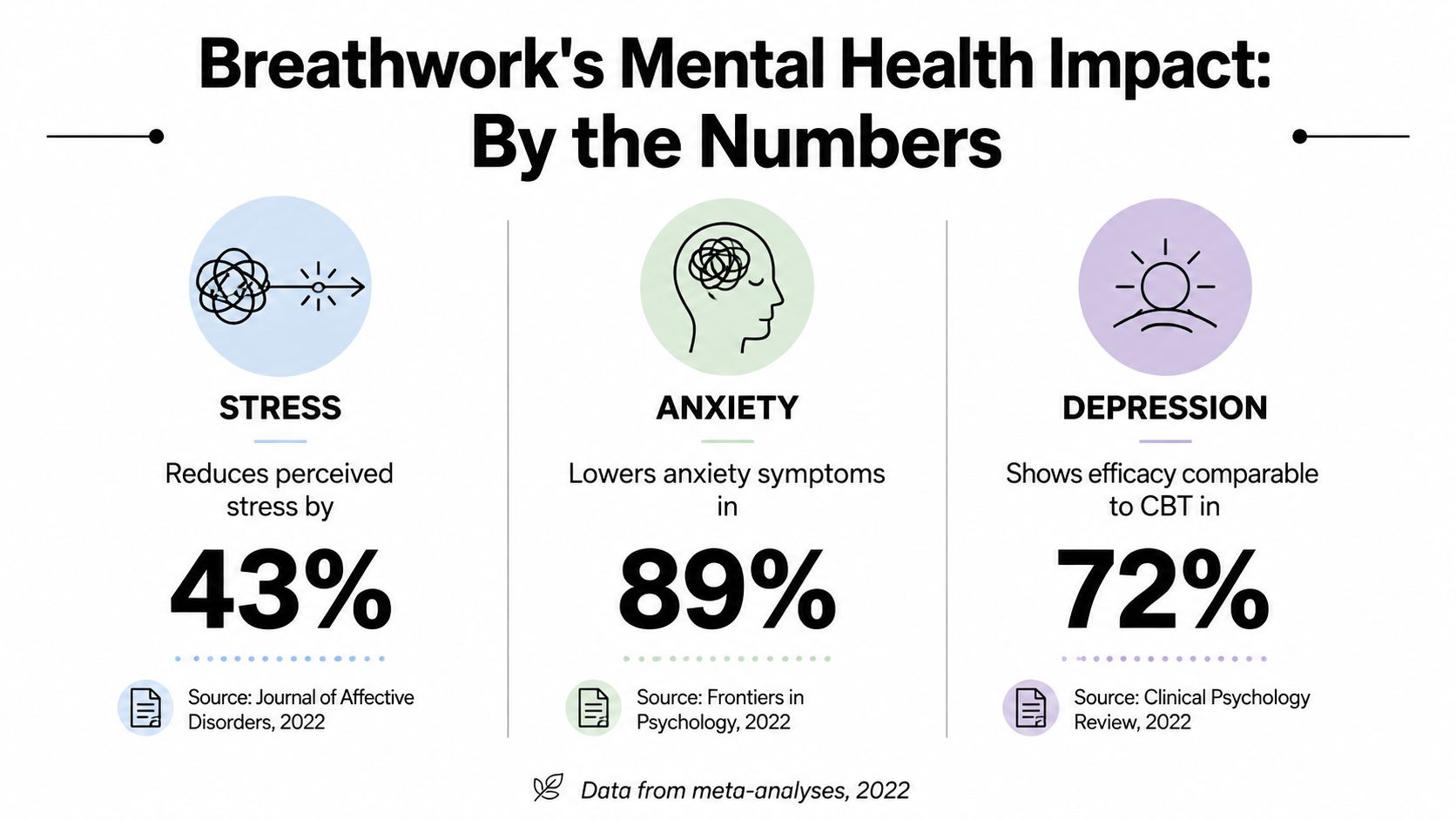
The claims in this infographic are not supported by the linked clinical reviews. Those studies report effect sizes, study counts, and participant outcomes, rather than the percentages shown here. Treat the image as an illustration, not as a validated summary of the evidence.
The value of short practices
Short protocols may be easier to test in everyday life. A randomized study of structured respiration practices found that participants practiced for only a few minutes per day. The breathwork groups showed improvements in mood and respiratory rate compared with mindfulness meditation, while both approaches reduced state anxiety and negative affect and increased positive affect.
That makes a brief practice a reasonable experiment, not a replacement for therapy, medication, crisis support, or medical assessment. Keep the breathing comfortable, track how you feel during and after practice, and stop if symptoms worsen. Readers exploring breathing routines for rest can also review this guide to breathwork for sleep.
Major Breathwork Modalities and Who They Serve Best
Choosing a breathwork style starts with the outcome you want. A technique for settling before bed shouldn't be selected for the same reasons as an activating or emotionally intense session. The table below offers a practical orientation, not a guarantee of results.
Breathwork modalities comparison
| Modality | Technique | Session Length | Primary Benefits | Best For |
|---|---|---|---|---|
| Box breathing | Inhale, hold, exhale, hold in an even pattern | Brief, structured practice | Focus, composure, deliberate pacing | People who want a simple pattern for work or performance |
| Cyclic sighing | Inhale, add a second smaller inhale, then use a long exhale | Short practice | Quick down-regulation and mood support | Beginners seeking a compact stress tool |
| Coherent breathing | Slow, even breathing with balanced phases | Short to moderate practice | Autonomic awareness and rhythmic breathing | People interested in steady regulation |
| Wim Hof Method | More activating breathing patterns, often paired with other elements of the method | Guided or self-directed | Energy and resilience-oriented practice | Experienced practitioners who understand intensity and safety |
| Holotropic breathwork | Intensive, continuous breathing in a facilitated setting | Longer guided session | Emotional exploration and altered experience | Adults seeking deep exploration with qualified supervision |
Box breathing is easy to remember because the structure gives attention a clear task. That can be useful when your mind is scattered, but breath holds may feel uncomfortable for some people. You should shorten or remove the holds rather than treating discomfort as a test of willpower.
Cyclic sighing places emphasis on a long exhale. The randomized study described above used a 5-minute daily practice and found improvements in mood and respiratory rate compared with mindfulness meditation (cyclic sighing research). It's a sensible starting point for people who prefer a short, clearly defined exercise.
Practical rule: Choose the least intense method that matches your goal, then assess how your body responds.
Coherent breathing and other slow-paced approaches may appeal to people interested in autonomic balance. Intensive styles, including some versions of the Wim Hof Method or holotropic breathwork, require more careful screening because altered breathing can produce strong sensations.
Safety Considerations and Who Should Approach with Caution
Breathwork isn't automatically safe because breathing is natural. Gentle, comfortable paced breathing is different from high-ventilation practice, forceful breathing, prolonged breath retention, or sessions designed to create intense altered states.
Independent reviews describe possible transient effects from intensive breathing, including light-headedness, palpitations, anxiety, sweating, tingling, and exhaustion. They also caution that adverse-event reporting is incomplete. One review cited that only about 20% of included studies actively reported adverse events, even when no serious harms were recorded (review of high-ventilation breathwork).
When screening matters
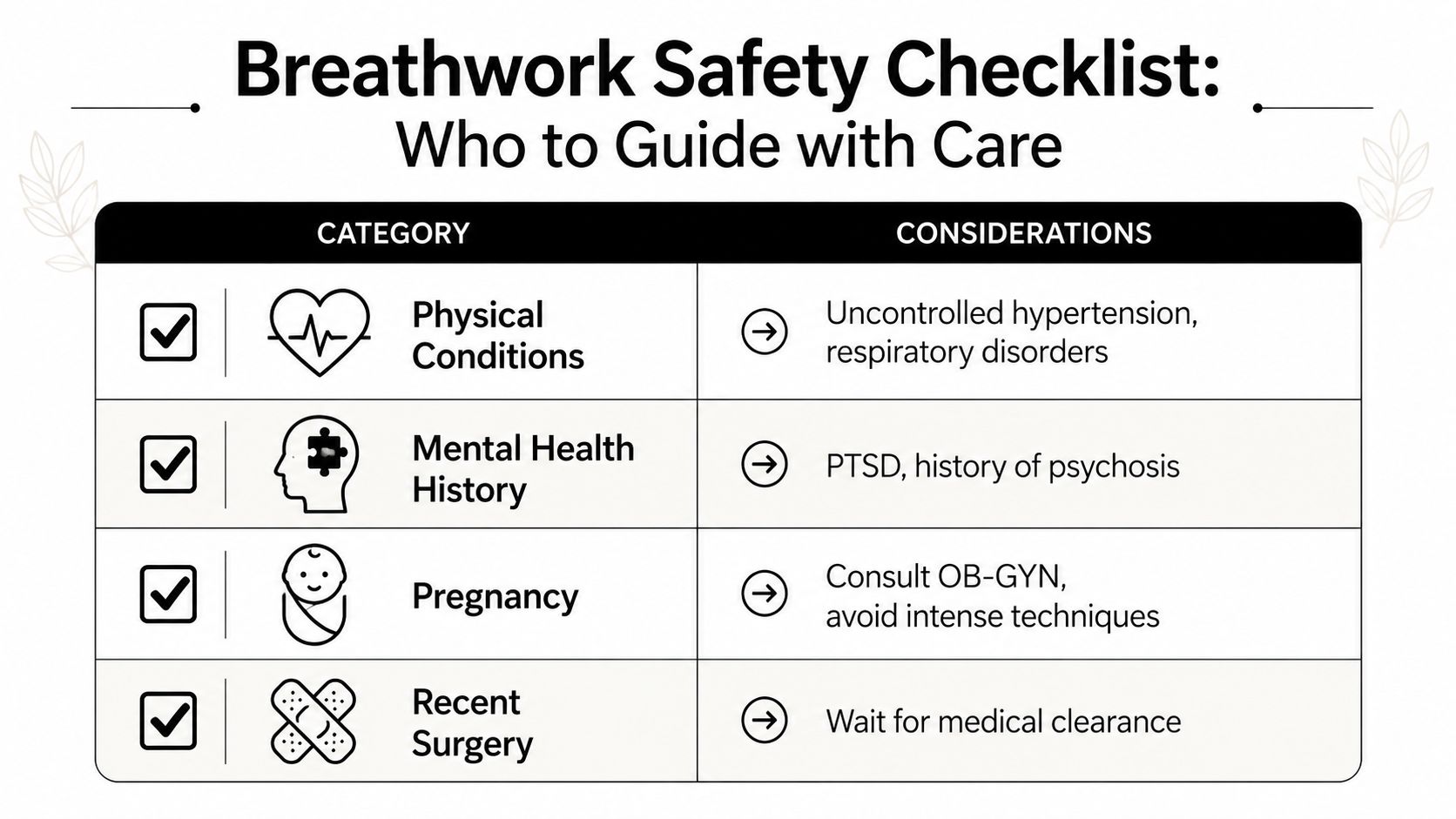
Speak with an appropriate healthcare professional before trying intense breathwork if you have a cardiovascular condition, uncontrolled hypertension, a respiratory disorder, epilepsy, or another condition that could be affected by changes in breathing or arousal. Pregnancy, recent surgery, and a history of serious mental-health symptoms also call for individualized guidance.
The relevant concern isn't that everyone with one of these conditions must avoid every breathing exercise. The concern is that protocols differ, and a clinician or qualified facilitator can help you avoid a mismatch between the technique and your health profile.
Stop signs during a session
Stop the exercise, return to normal comfortable breathing, and seek help when appropriate if you experience chest pain, fainting, severe shortness of breath, confusion, or symptoms that don't settle. Don't practice intense breathwork in water, while driving, or anywhere a loss of consciousness could cause injury.
A responsible facilitator should explain the method, screen participants, describe possible sensations, invite you to stop, and avoid framing distress as evidence that the practice is working. Benefits don't equal risk-free use, and intensity isn't a reliable measure of effectiveness.
Getting Started with Breathwork and Finding Vetted Studios
Start with consistency and comfort, not spectacle. Sit or lie somewhere safe, keep the breathing gentle, and choose a practice that lets you remain aware of your body. If you feel worse rather than steadier, stop and reassess the method.
A simple home experiment
Cyclic sighing offers a clear short-format option because it has been studied as a daily practice. Begin with a comfortable session rather than forcing a particular depth or speed. Track three observations afterward: your mood, your sense of physical activation, and whether any uncomfortable symptoms appeared.
You can use this progression:
- Learn the pattern: Practice while seated, without breath retention or strain.
- Keep the setting safe: Don't practice near water, while operating equipment, or during activities that require uninterrupted attention.
- Record your response: Note whether you feel calmer, more alert, unchanged, or uncomfortable.
- Adjust conservatively: Reduce intensity or stop if you develop dizziness, tingling, palpitations, anxiety, or exhaustion.
- Seek guidance when needed: Choose a qualified facilitator if you want an intensive modality or have a relevant health history.
For readers deciding between breathwork and meditation, this explanation of guided meditation can help clarify how instruction, pacing, and accountability differ.
Finding a local studio
A quality studio should make its modality easy to identify. Look for a facilitator who explains whether the session involves slow pacing, breath holds, high ventilation, continuous breathing, or emotional processing. Clear contraindications and an intake process are signs that the studio takes participant safety seriously.
Lucidoura is one directory option for finding local wellness businesses, including spaces that list breathwork among their offerings. Its organized categories, city filters, and concise place summaries can help you compare studios by modality and setting rather than sorting through unrelated search results. You can also check the studio's own website, ask about facilitator training, and confirm that the session matches your experience level.
Your Breathwork Decision Framework
Use four questions before choosing a practice.
- What do you want right now? Choose stress relief, focus, sleep support, emotional exploration, or an activation-oriented practice.
- How much intensity suits you? Start with gentle paced breathing unless you have a clear reason, appropriate screening, and qualified guidance for something stronger.
- What does your health profile allow? Consider cardiovascular, respiratory, neurological, pregnancy-related, surgical, and mental-health factors before using high-ventilation methods.
- Do you learn better alone or with support? Solo practice offers privacy and flexibility. A studio can provide pacing, supervision, and accountability, but only if the facilitator explains the method and safety boundaries.
The central lesson is simple: the best breathwork practice is the one you can perform safely and repeat consistently. Research supports measurable breathwork benefits, but results vary by protocol, person, and outcome. Start small, observe your response, and treat intensity as optional rather than proof of progress.
Lucidoura helps you discover local wellness spaces, including studios and venues that offer breathwork alongside meditation, sound healing, yoga, and other holistic practices. Visit Lucidoura to filter options by city and category, compare concise place summaries, and choose a guided experience that fits your goals and comfort level.